Review: Curious Enough to Take It Apart
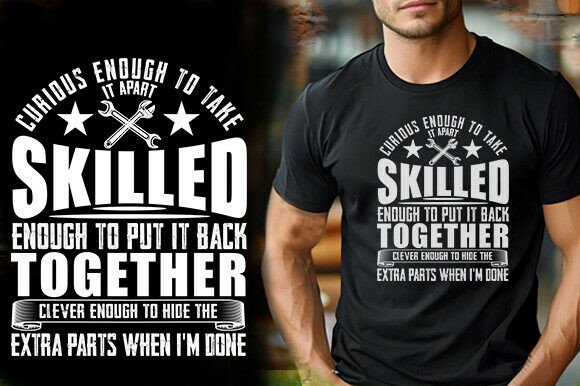
As an embroidery designer who has spent countless hours digitizing and stitching everything from delicate baby onesies to heavy-duty workwear, I have developed a keen eye for what makes a design truly viable in the real world. It is not just about how a graphic looks on a screen; it is about how those lines translate into thread, how the fabric reacts to the needle, and whether the final finished product holds up to wear and washing. Recently, I evaluated the design titled CURIOUS ENOUGH to TAKE IT APART SKIILED, a piece marketed primarily as a mechanic-themed asset. While the source description highlights its utility for POD sites like Amazon and Etsy, my focus was strictly on its potential as a high-quality machine embroidery design for tangible goods.
First Impressions and Visual Personality
The immediate mood of this design is playful yet rugged. The phrase "Curious Enough to Take It Apart" speaks directly to the tinkerer, the engineer, and the mechanic who finds joy in understanding how things work. Visually, the layout suggests a bold, industrial aesthetic. For an embroidery project, this type of typography-driven graphic relies heavily on legibility and weight. When I first examined the concept, I considered how the lettering would need to be balanced. If the font is too thin, it gets lost in the fabric texture; if it is too dense, it creates a stiff, cardboard-like feel on the garment. The "Skilled" aspect of the title implies a level of precision that should be mirrored in the stitch work. This is not a design for faint hearts or fragile fabrics; it demands presence.
Real-World Application: Beyond the T-Shirt
While the product category lists this under T-Shirt Designs and Graphics, limiting it to printed tees would be a missed opportunity for any serious craft business. In my workshop, I immediately envisioned this design stitched onto a heavy canvas tote bag design. Imagine a mechanic’s tool bag or a weekend DIY kit carrier embroidered with this phrase. The durability of thread compared to ink makes it far superior for items that will be tossed into the back of a truck or rubbed against greasy workbenches.
I also tested the concept mentally for sweatshirt embroidery. A charcoal heather hoodie with this design stitched in a contrasting orange or steel blue thread would make an excellent gift for Father’s Day or a retirement present for a seasoned technician. The design fits naturally into the realm of personalized gift items because it validates the recipient’s hobby or profession. It is not just a logo; it is an identity statement. For Etsy sellers and small shop product creators, this versatility is key. You are not just selling a shirt; you are selling a sense of belonging to a community of makers and fixers.
Technical Considerations for Stitching
When translating any graphic into an embroidery file, one must consider stitch density and direction. For a text-heavy design like this, I recommend using a combination of fill stitch for larger letters and satin stitch for smaller accents or borders, provided the column width allows for it. If the original graphic has intricate details or tiny serifs, these may need to be simplified. Embroidery cannot replicate the infinite resolution of a digital print. Tiny details often turn into messy clumps of thread, especially on textured fabrics.
If you are planning to use this as an applique design, it could significantly reduce stitch count and production time. By using a contrasting fabric patch for the background or the letters themselves, you add tactile depth and reduce the amount of thread needed. This is particularly useful for larger formats, such as back patches on work jackets. However, if sticking to standard embroidery, pay close attention to the thread colors. High contrast is essential. A dark thread on a dark navy cap will vanish, ruining the impact. Always test your color combinations on scrap fabric before committing to the final piece.
Fabric and Hoop Constraints
One must be cautious when applying this design to challenging surfaces. For instance, caps and hats require specialized digitizing due to the curved surface and thick seams. If the design is too wide, it may distort around the front panel. Similarly, stretchy fabrics like performance tees require a cut-away stabilizer to prevent the stitching from puckering over time. I would advise against using this on very thin, silky materials unless it is scaled down significantly, as the weight of the thread could pull the fabric out of shape.
For baby embroidery or delicate nursery decor, this design might be too aggressive unless softened with pastel threads and a smaller hoop size. However, for holiday embroidery gifts aimed at adults, such as a customized apron for the BBQ enthusiast who loves to take apart grills, it works perfectly. The key is matching the scale of the design to the scale of the item. A large, dense design on a small pocket will look cluttered and feel stiff.
Commercial Viability and Brand Consistency
For commercial embroidery projects, consistency is vital. If you are producing these for a client or your own brand, ensure that the digitized version maintains its clarity across different garments. A design that looks crisp on a polo shirt might look bulky on a fleece jacket if the underlay stitches are not adjusted. As a digital embroidery file seller or a producer of design assets, providing multiple sizes or format options can increase customer trust. Buyers want to know that the file they purchase will work on their specific machine without extensive tweaking.
Furthermore, using printable mockup tools to preview the design on various products can help gauge customer interest before you stitch a single thread. This helps in creating compelling listings for your small shop product lines. Whether you are selling the physical embroidered patch or the custom apparel, the visual appeal drives the sale. The rugged, curious nature of this design appeals to a demographic that values skill and hands-on work, making it a strong candidate for niche marketing.
Final Designer Notes
Before launching this into your production line, always check the specific license terms. The description mentions customization for POD sites, but embroidery rights can differ. Confirm whether you are allowed to sell the physical stitched items or if the license is for personal use only. Additionally, since exact stitch counts and file formats were not detailed in the source info, request a sample stitch-out or view a detailed preview if available. Test the design on both light and dark fabrics to ensure versatility. Check the corners of the letters for potential thread breaks or jumps that might need trimming. By treating CURIOUS ENOUGH to TAKE IT APART SKIILED with the technical respect it deserves, you can transform a simple graphic into a high-value, durable, and meaningful textile product.