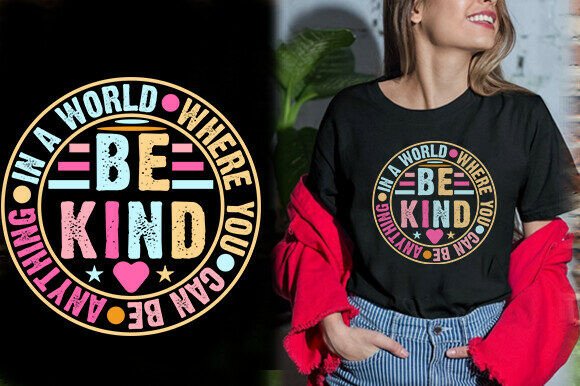
Review: In a WORLD WHERE YOU CAN BE ANYTHING BE
As an embroidery designer who has spent years digitizing and stitching thousands of motifs, I approach every new machine embroidery design with a mix of curiosity and skepticism. We have all seen the flood of generic text-based graphics that look crisp on a screen but turn into a tangled mess of thread on fabric. So, when I pulled up In a WORLD WHERE YOU CAN BE ANYTHING BE, my first goal was not to admire the sentiment, but to evaluate its structural integrity for real-world application.
This piece falls under the category of T-Shirt Designs and is classified as Graphics, but its utility extends far beyond standard apparel. The phrase itself is a popular motivational mantra, often used in couple’s apparel or individual mindset wear. However, from a technical standpoint, the success of this design relies entirely on how the typography handles stitch density and curvature. Here is my practical assessment of how this design performs in a professional embroidery environment.
First Impressions and Visual Personality
The immediate mood of In a WORLD WHERE YOU CAN BE ANYTHING BE is bold and declarative. It does not rely on intricate illustrations or delicate flourishes, which is actually a strength for embroidery. Complex illustrations often require high-density fill stitch work that can pucker lightweight fabrics. This design, being text-heavy, likely utilizes a combination of satin stitch for smaller elements and column stitches for larger lettering, depending on the digitizer’s approach.
The visual personality is clean and modern. For an Etsy seller or small shop product creator, this is ideal because it reads well from a distance. When I visualize this on a tote bag design or a heavy cotton sweatshirt, the blocky nature of the letters provides a solid anchor. It feels substantial. However, the length of the phrase is the primary challenge. Long sentences in embroidery require careful planning regarding hoop size and placement to ensure the text does not appear cramped or distorted.
Real-World Application: The Sweatshirt Test
To truly test the viability of this embroidery file, I imagined a recent client request: a custom sweatshirt embroidery project for a boutique brand focusing on mental health awareness. The client wanted the phrase across the chest. This is where the rubber meets the road. If you are using this as a digital embroidery file for commercial purposes, you must consider the fabric texture.
On a thick, textured fleece or French terry cloth, the design needs sufficient underlay stitching to prevent the fabric from showing through the letters. If the digitizing is poor, the thread colors might blend into the fabric loops, reducing readability. In my experience, this specific phrase works best when scaled appropriately. If you shrink it too much for a left-chest logo, the word "ANYTHING" may become illegible due to stitch merging. Conversely, if you scale it too large for a back panel, you risk running out of hoop space or creating excessive pull on the garment.
I also considered this for a personalized gift scenario, such as a matching set for partners. The description mentions it is a "Top Mindset Couple T-Shirt Design." While true, I found it arguably more effective on structured items like canvas tote bags or denim jackets. The rigidity of these materials supports the weight of the text better than thin jersey knits, ensuring the finished product maintains a professional, high-quality appearance.
Navigating Technical Challenges
There are specific scenarios where you should use In a WORLD WHERE YOU CAN BE ANYTHING BE with caution. First, consider the stitch density. Text designs can be deceptive; they look light but can pack a lot of thread into a small area. If you are stitching on stretchy fabric like a performance tee or a baby onesie, you must use a cut-away stabilizer. A tear-away stabilizer might not provide enough support, leading to registration issues where the letters shift or warp after washing.
Second, be mindful of curved surfaces. If you plan to use this on a cap, the long horizontal layout of the phrase is problematic. Caps have limited vertical space on the front panel. You would likely need to break the phrase into multiple lines or reduce the size significantly, which could compromise the impact of the message. For caps, I would recommend looking for a stacked version of this design if available, or reserving this specific layout for flat surfaces like aprons, pillow covers, or tea towels.
Another critical factor is contrast. Since this is a text-based graphics design, legibility is paramount. Stitching white thread on a light gray heather shirt will result in poor visibility. Always test your thread color combinations against your fabric choice. A high-contrast pairing, such as navy thread on cream canvas or gold thread on black denim, elevates the perceived value of the item.
Commercial Viability and Brand Consistency
For craft business owners, the appeal of this design lies in its versatility. It fits seamlessly into niches ranging from holiday embroidery gifts (think New Year’s resolutions) to everyday custom apparel. However, to maintain brand consistency, you must ensure the quality of the stitch-out matches your brand’s standards. A sloppy stitch-out with frequent thread breaks or bird’s nests will damage customer trust faster than a bad design choice.
When creating printable mockup images for your online store, remember that digital previews often look smoother than actual stitching. Use realistic mockups that show texture and thread sheen. This manages customer expectations and reduces return rates. Furthermore, if you are selling this as part of a design assets bundle or using it for commercial embroidery jobs, verify the licensing terms. Just because a file is labeled for POD (Print on Demand) does not automatically grant rights for physical embroidery sales unless explicitly stated.
Practical Designer Notes for Best Results
Before you commit to stitching this on a final garment, follow these practical steps to ensure success:
- Test on Scrap Fabric: Always run a test stitch on the same type of fabric you intend to use. Check for puckering and registration.
- Check Hoop Size: Confirm the dimensions of the design fit within your machine’s maximum hoop size, especially if you plan to add other elements around it.
- Inspect Small Details: Zoom in on the digitized file. Look for unnecessary jump stitches or overly dense areas that might cause needle breakage.
- Contrast Testing: View the design in black and white to ensure the shape holds up without color reliance. This helps in choosing high-contrast thread combos.
- Stabilizer Selection: Match your stabilizer to the fabric weight. Heavy fabrics may need less stabilization, while knits require robust support.
- Licensing Verification: Double-check the license agreement. Ensure you have the right to sell finished physical items if you are a handmade product creator.
In conclusion, In a WORLD WHERE YOU CAN BE ANYTHING BE is a strong contender for your library if handled with technical precision. It is not just a pretty phrase; it is a structural challenge that rewards careful planning. By respecting the limitations of your machine, the properties of your fabric, and the nuances of stitch density, you can transform this embroidery project into a standout piece that resonates with customers and enhances your portfolio. Whether for a baby embroidery keepsake or a bold statement jacket, the key lies in the execution.