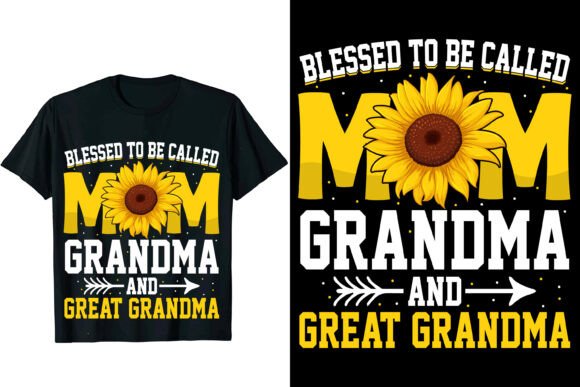
Blessed to Be Called Mom Grandma T Shirt Review
As a designer who spends more time staring at stitch simulations than actual fabric, I have learned that not every graphic translates well to thread. When I first pulled up the Blessed to Be Called Mom Grandma T Shirt design files, my initial reaction was one of cautious optimism. The description promises graphics drenched in vibrancy and crafted as 100 vector shapes, which suggests a level of flexibility that is rare in pre-made digital assets. For those of us running small embroidery businesses or crafting personalized gifts, this adaptability is not just a nice-to-have feature; it is a necessity.
First Impressions and Visual Personality
The mood of this collection is warm, celebratory, and deeply personal. It taps into the emotional core of family milestones, making it an ideal candidate for holiday embroidery projects or sentimental personalized gift items. Because the elements are built from vector shapes, the lines appear clean and deliberate. In the world of Illustrations and Graphics, this clarity is crucial. When we translate these visuals into a machine embroidery design, we need distinct paths. Blurry or overly complex gradients often result in muddy stitching, but the structural integrity here suggests that the design will hold up well under the needle.
I immediately imagined this on a high-quality cotton tote. The layout feels balanced, neither too dense nor too sparse. For an Etsy seller looking to expand their spring catalog, this type of imagery fits perfectly into the "modern heirloom" aesthetic that is currently trending. It does not scream for attention with chaotic details; instead, it invites a closer look, which is exactly what you want in a finished product meant to be cherished.
Real-World Application: The Sweatshirt Test
To truly evaluate the Blessed to Be Called Mom Grandma T Shirt graphics, I mentally walked through a recent client request: a custom fleece sweatshirt for a new grandmother. This is a common scenario for any craft business owner. Fleece is tricky. It has pile, it stretches, and it can swallow small details if the stitch density is not managed correctly.
Because these graphics are described as having unwavering flexibility, I would approach this project by simplifying the color palette. While the source material is vibrant, embroidery looks best with intentional contrast. I would select three to four thread colors that pop against the fleece—perhaps a soft cream, a muted sage, and a deep charcoal. The vector nature of the shapes allows me to isolate specific elements, perhaps using a satin stitch for the borders and a lighter fill stitch for the interior spaces. This prevents the design from becoming a stiff, cardboard-like patch on a soft garment.
If you are creating a tote bag design or a sturdy canvas apron, you have more freedom. These fabrics handle higher density better. In this context, the vibrancy of the original graphics can shine. You might even consider an applique design approach, where the vector shapes serve as cut guides for contrasting fabrics. This adds texture and reduces stitch count, which is a major selling point for customers who worry about comfort.
Navigating Technical Challenges
While the flexibility of these design assets is a strength, it also requires diligence from the operator. There are specific scenarios where you must proceed with caution. If you are working with a small hoop size, such as a 4x4 inch frame for a baby hat or a pocket detail, you must scrutinize the smallest elements. Tiny lettering or intricate corners can easily bunch up or break during stitching. I always recommend zooming in to 400% on your screen to check for potential collision points between stitch paths.
Another critical consideration is fabric texture. On textured fabrics like linen or waffle knit, fine details can get lost. For the Blessed to Be Called Mom Grandma T Shirt motifs, I would avoid using them on highly textured surfaces unless I increase the scale significantly. Similarly, when working on stretchy fabrics like jersey knits for t-shirts, proper stabilization is non-negotiable. A cut-away stabilizer is usually my go-to for garments that will be washed frequently, ensuring the design does not pucker over time.
Dark fabrics present another challenge. If you are stitching on navy or black, you cannot rely on the fabric to provide background contrast. You must ensure that your embroidery file includes adequate underlay stitches to prevent the dark fabric from peeking through the lighter top stitches. This is where the clean vector origins of the graphics help; they allow for precise planning of underlay patterns without guessing work.
Commercial Viability and Brand Consistency
For small shop product lines, consistency is key. Using a cohesive set of graphics helps build brand recognition. The Blessed to Be Called Mom Grandma T Shirt collection offers a unified visual language that can be applied across various items, from embroidered patch badges to nursery decor. This versatility allows you to create a coordinated product suite, which increases average order value.
When preparing printable mockup images for your online store, the clarity of these vectors ensures that your digital previews look professional. Customers buy with their eyes first. A crisp, clean mockup that accurately represents the potential custom apparel builds trust. However, remember that a mockup is not the final reality. Always stitch out a sample on the actual fabric you intend to sell. This step confirms that the running stitch outlines are smooth and that the color transitions make sense in thread, not just on a screen.
Practical Designer Notes for Best Results
Before you commit to a large production run or list these items in your shop, take a moment to review these practical steps:
- Test on Scrap Fabric: Never skip the test stitch. Use the same fabric and stabilizer combination you plan to use for the final embroidery project.
- Check Thread Contrast: View your design in grayscale. If the elements blend together without color, you may need to adjust your thread choices or add outlining stitches for definition.
- Verify Licensing: While the graphics are flexible, always confirm the license terms for commercial use. Ensure you are cleared to sell finished items or modified digital products.
- Inspect Small Details: Look closely at any tiny elements. If they seem too small for your needle size, consider scaling up the design or removing those specific details.
- Compare Backgrounds: Test the design on both light and dark fabrics. You may need two different versions of the file—one optimized for light backgrounds and one for dark—to ensure maximum visibility.
In conclusion, the Blessed to Be Called Mom Grandma T Shirt graphics offer a solid foundation for meaningful embroidery work. They are not just decorative; they are functional tools for storytellers. By respecting the technical limitations of embroidery machines and understanding the nuances of fabric behavior, you can transform these digital vectors into tangible, heartfelt treasures. Whether you are a hobbyist making a gift for a friend or a professional decorator fulfilling a bulk order, these designs reward careful preparation with stunning results.