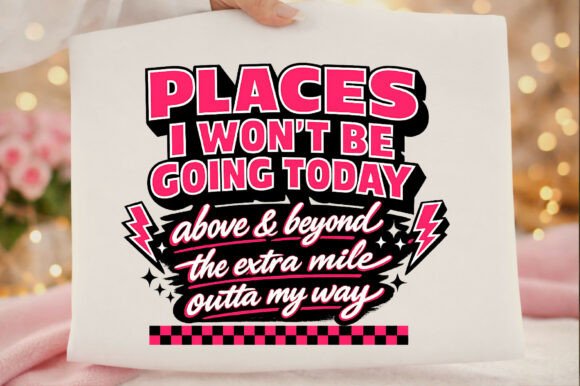
Reviewing the Funny Sarcastic Mental Health Awareness Design
As an embroidery designer who has spent countless hours digitizing and stitching out files for clients, I have learned that not every T-Shirt Designs graphic translates well to thread. The gap between a crisp digital PNG and a textured, stitched reality is where many projects fail. Recently, I evaluated the Funny Sarcastic Mental Health Awareness design to determine its viability for real-world application. This isn’t just about whether the joke lands; it is about whether the lines hold up under the needle.
The first impression of this piece is its bold, unapologetic personality. In the world of Graphics, sarcasm often relies on clean typography and stark contrast. When viewing this as a potential machine embroidery design, the immediate question is readability. Sarcasm loses its punch if the viewer has to squint to decipher the text. Fortunately, the layout suggests a strong visual hierarchy. The design leans into a modern, slightly irreverent aesthetic that fits perfectly with current trends in mental health advocacy, which often uses humor as a coping mechanism and a conversation starter.
From Screen to Stitch: A Real-World Test Case
To truly understand the value of this asset, I imagined a specific scenario: a custom order for a local boutique specializing in self-care items. The client wanted a run of canvas tote bag design prototypes for an upcoming community wellness fair. The goal was to create something that felt personal yet professional, avoiding the cliché softness often associated with mental health merchandise.
I visualized placing the Funny Sarcastic Mental Health Awareness motif on a heavy-weight cotton canvas. The texture of the fabric plays a crucial role here. Canvas provides a stable base, reducing the risk of puckering that often plagues sweatshirt embroidery or lighter knits. The design’s inherent boldness complements the rugged nature of the tote. It doesn’t need to be delicate; it needs to be legible from three feet away. In this context, the design shines. It transforms a simple accessory into a statement piece, encouraging engagement and smiles from passersby.
However, the application changes drastically if we move to a curved surface, such as a cap. Here, the design’s width becomes a critical factor. If the sarcastic phrase is too long, it may distort around the crown of the hat, breaking the visual flow. For caps, I would recommend scaling the design down significantly or isolating the central graphic element, if one exists, while keeping the text minimal. This highlights the importance of understanding your substrate before hitting the "start" button on your machine.
Navigating Technical Challenges in Embroidery
While the concept is strong, the technical execution requires careful planning. One of the primary concerns with text-heavy embroidery file assets is stitch density. If the original digitizer relied heavily on fill stitch patterns for large letters, the resulting product could feel stiff and board-like. This is particularly problematic for baby embroidery items or lightweight apparel where comfort is paramount. A stiff patch on a soft onesie is a recipe for customer dissatisfaction.
For those using this design on stretchy fabrics, such as jersey knits for t-shirts, the use of a proper stabilizer is non-negotiable. I strongly advise using a cut-away stabilizer for garments that will undergo frequent washing. The tension from the threads can pull lightweight fabrics out of shape over time, distorting the sarcastic message into something unreadable. Additionally, check the thread colors against your fabric choice. High contrast is essential for readability. A dark thread on a dark navy shirt might look sophisticated in a mockup but will vanish in real life. Always test your color combinations on scrap fabric before committing to the final finished product.
Another technical nuance is the handling of small details. Sarcasm often lives in the punctuation or small graphical accents. In embroidery, tiny elements can get lost or become tangled nests of thread if the stitch density is too high or the resolution too low. If you are working with a smaller hoop size, ensure that the design scales down without losing its essence. Sometimes, simplifying the design by removing intricate borders or switching to a running stitch outline for certain elements can improve clarity and reduce production time.
Commercial Viability and Brand Consistency
For Etsy sellers and owners of a small shop product line, this design offers significant commercial potential. Mental health awareness is a evergreen niche, and the humorous angle appeals to a younger demographic looking for relatable content. However, professionalism is key. A poorly stitched design can damage brand trust. Ensure that your tension settings are calibrated and that your needles are sharp. The perceived value of a handmade product is directly tied to its finish quality.
When creating printable mockups for your online store, remember that digital previews often look cleaner than the physical item. Use high-quality photos of actual stitched samples to manage customer expectations. Highlight the texture of the thread and the quality of the backing. This transparency builds confidence and reduces return rates. Furthermore, consider how this design fits into your broader catalog. Does it align with your brand’s voice? If your shop focuses on serene, minimalist aesthetics, a sarcastic design might feel disjointed. However, if your brand embraces authenticity and humor, this asset is a perfect fit.
It is also vital to address licensing. Since this is sourced as a PNG for T-shirt designs, converting it to an embroidery project may require manual digitizing or auto-digitizing software. If you are purchasing a pre-digitized version, confirm the license terms. Can you sell finished items? Are there restrictions on the number of units? Never assume. Always verify the rights associated with the digital embroidery file to protect your craft business from legal issues.
Final Verdict for Designers and Makers
The Funny Sarcastic Mental Health Awareness design is a compelling choice for makers who want to blend humor with meaningful messaging. It works best on stable, medium-to-heavy weight fabrics like canvas, denim, or thick cotton blends. It is ideal for custom apparel, embroidered patch creations, and home decor items like pillow covers or holiday embroidery gifts.
Before you begin, take the time to review the design’s complexity. Check for potential jump stitches or dense areas that might cause bunching. Test it on similar fabric to your final product. Adjust your applique design techniques if necessary, perhaps using fabric fills to reduce thread bulk. By approaching this design with a critical, experienced eye, you can transform a simple graphic into a high-value, engaging product that resonates with customers. Remember, the best embroidery doesn’t just look good; it feels good, lasts long, and speaks clearly. This design has the potential to do all three, provided you respect the technical demands of the medium.